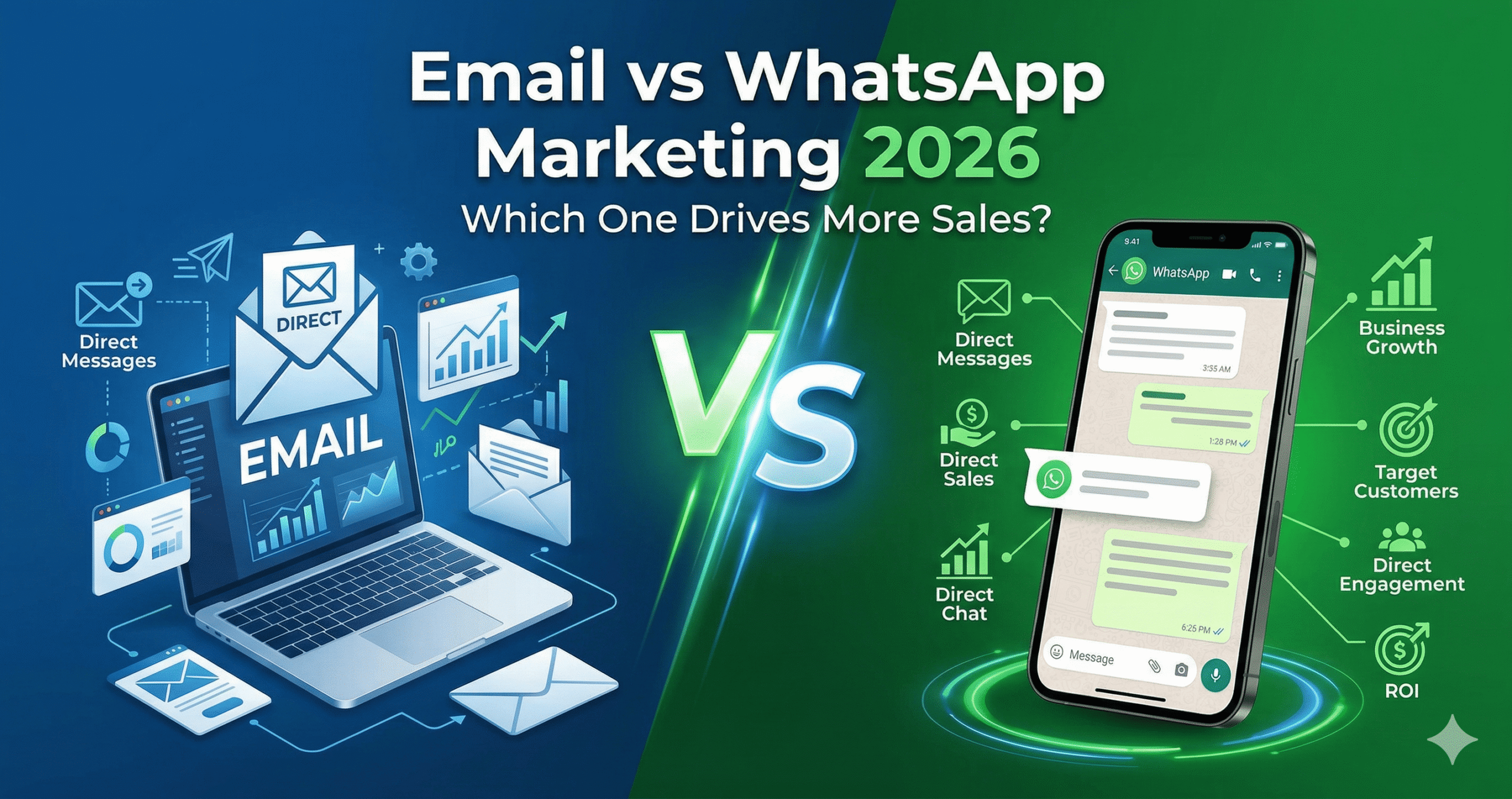
Email Marketing vs WhatsApp Marketing in India: Which is More Effective in 2026?
The Real Question Businesses Are Asking Today
Every business today faces the same confusion:
Should you invest in email marketing…
or focus on WhatsApp marketing?
Both are powerful. Both are widely used.
But the real difference lies in how customers respond to them.
In 2026, marketing is no longer about just sending messages —
it’s about getting attention, engagement, and conversions.
👉 Get Verified All India Database from IndiaDatabase.net
Understanding the Two Channels (In Simple Terms)
Let’s not complicate it.
Email marketing is more formal.
It works like a digital letter — detailed, structured, and professional.
WhatsApp marketing, on the other hand, is instant and personal.
It feels like a direct conversation.
👉 That single difference changes everything.
Where Email Marketing Still Wins
Email is far from dead — in fact, it’s still essential in many industries.
It works best when:
- You are targeting businesses (B2B)
- You need to send detailed information
- You want to build long-term communication
- You are sharing proposals, newsletters, or reports
For example:
A company selling software or corporate services will always rely on email for serious decision-making communication.
👉 This is where a Business / Corporate Email Database becomes valuable.
Why WhatsApp is Dominating in 2026
Now let’s talk about reality.
People check emails occasionally…
but they check WhatsApp multiple times a day.
That’s why WhatsApp marketing is exploding.
It works best when:
- You want instant responses
- You are targeting direct customers (B2C)
- You are promoting offers, deals, or services
- You need quick conversions
A simple message like:
“Special Offer Today – Limited Discount”
can generate faster results on WhatsApp than email.
👉 This is where a WhatsApp Users Database becomes a game changer.
👉 Get Verified All India Database from IndiaDatabase.net
Side-by-Side Comparison (What Actually Matters)
| Factor | Email Marketing | WhatsApp Marketing |
| Open Rate | Medium | Very High |
| Speed | Slow | Instant |
| Personalization | Moderate | High |
| Cost | Low | Low |
| Conversion Rate | Moderate | High |
| Best For | B2B | B2C |
👉 In simple words:
Email builds relationships. WhatsApp drives action.
Real Business Use Case (Easy to Understand)
Let’s take two scenarios:
📧 Email Example:
A digital agency sends:
- Service details
- Portfolio
- Pricing proposal
👉 The client reads, thinks, and replies later.
📲 WhatsApp Example:
A local business sends:
- Offer message
- Product image
- Contact button
👉 The customer replies instantly.
👉 Same effort, different speed of results.
The Smart Strategy (What Top Businesses Do)
The smartest businesses don’t choose one —
they combine both.
Here’s how:
- Use WhatsApp for first contact + quick response
- Use Email for detailed follow-up + closing deals
This creates a complete funnel:
👉 Attention → Engagement → Conversion
The Role of Data (Most Important Part)
No matter which channel you choose, success depends on one thing:
👉 Quality Data
Without the right audience:
- Emails won’t open
- Messages won’t convert
With the right database:
- Targeting improves
- Response increases
- Sales grow
You can use:
- Email Databases (Corporate, B2B, Professionals)
- WhatsApp Users Databases (Mass B2C targeting)
👉 Get Verified All India Database from IndiaDatabase.net
What Should You Choose in 2026?
Let’s simplify the decision:
- If your goal is branding + long-term communication → Go with Email
- If your goal is instant leads + fast sales → Go with WhatsApp
- If you want maximum results → Use both together
Final Thought
Marketing is not about choosing tools —
it’s about choosing the right approach for your audience.
In India, where mobile usage is massive,
WhatsApp is leading the race.
But email still holds power in professional communication.
👉 The real winners are those who use both strategically.
🚀 Ready to Start?
Whether you want Email leads or WhatsApp users —
the right data is the first step.
👉 Get Verified All India Database from IndiaDatabase.net